Scottsdale buying guide · 45 · Homeowner decision series
A new kitchen should work for the way you cook without turning an unresolved exterior change into an expensive cabinet-order problem. For a Village Grove home, begin with one question: can the layout you want use the existing windows, exterior doors and other openings? This guide helps you document that choice, establish whether the exact property is in Scottsdale’s Village Grove 1–6 Historic District, and take a focused scope to the right professionals before committing to materials.
Your home. A clearer way to buy.
Compare the details. Then decide.
Bring your ideas, drawings or an existing quote. Explore the design and pricing before deciding whether to join.
No payment or membership is required to make a request. HIBC is a buying program, not a remodeling contractor.
Start with the exact property, not the neighborhood label
The City’s Historic Preservation Program identifies Village Grove 1–6 as a historic district. That specific designation matters. A listing, neighborhood description or nearby street name does not establish that your parcel is included. Use the City’s district information and ask Historic Preservation staff to confirm the property and applicable guidance before treating a design assumption as settled.
Create a private project cover sheet with the property address, available plans and the source of the designation answer. Keep unverified statements separate from records. Do not describe a window, cabinet or wall as original solely because it looks older. That simple distinction helps your designer avoid building a proposal around an assumption that later changes.
Separate interior choices from changes visible outside
The City’s Village Grove 1–6 preservation guidelines address exterior alterations, additions and rehabilitation within the district. They direct readers elsewhere for interior-remodeling information. The City’s current program page likewise describes an exterior-preservation focus. This does not mean that every cabinet replacement requires historic review, or that all work inside a house is exempt from other requirements.
Ask the designer to mark each proposed change on a simple existing-versus-proposed sketch. New cabinet doors inside the same room belong in a different discussion from enlarging a window over the sink, moving an exterior door or proposing a new vent termination. The point is to identify the work clearly; the responsible professionals and City determine the applicable review.
Compare a retained-opening plan with the proposed alteration
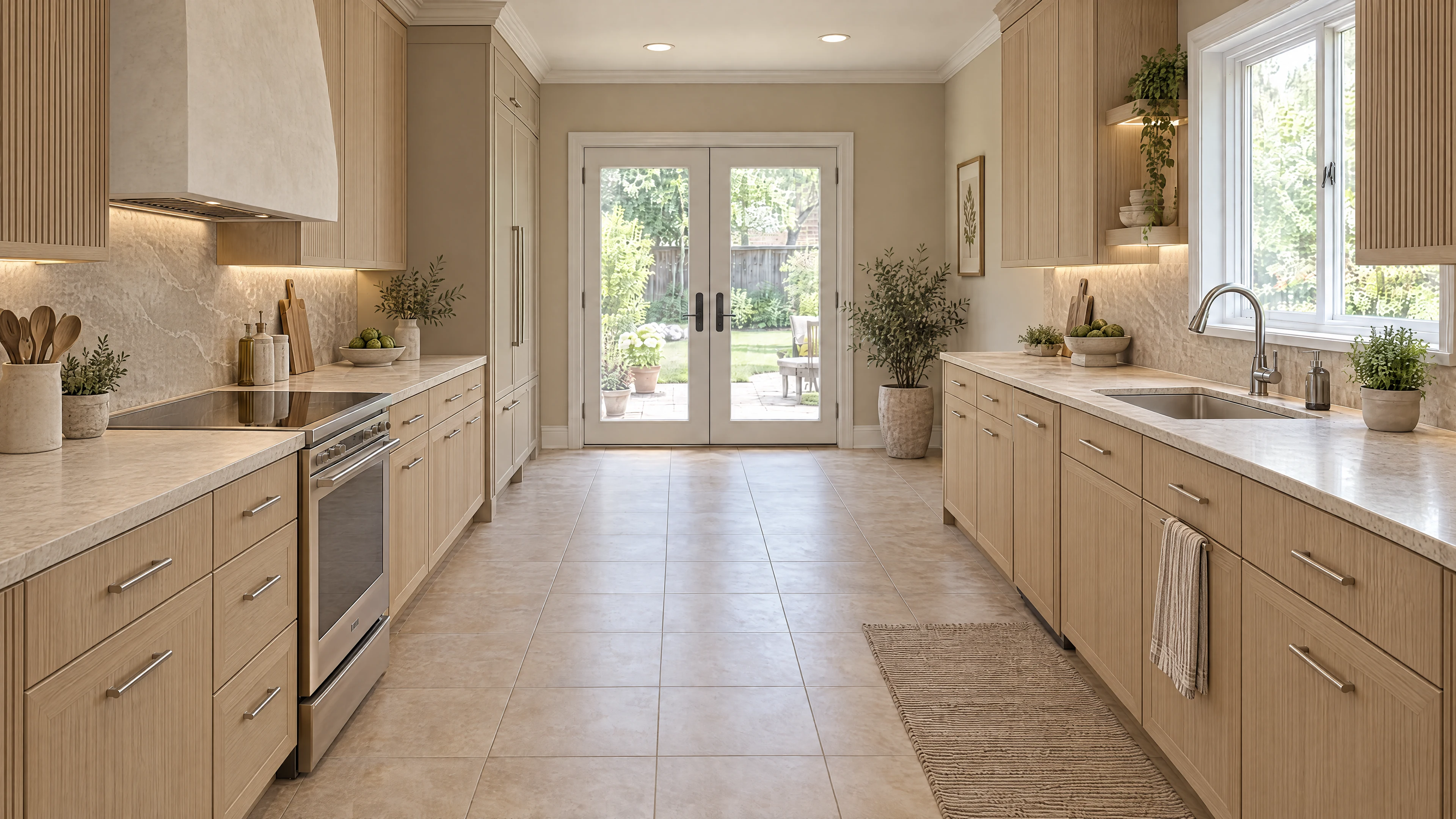
Give both options the same daily-use goal. For example, if the problem is a crowded preparation area, compare a plan using the current exterior openings with a plan that changes one. Ask each designer to show usable storage, appliance access, work surfaces and circulation. A more dramatic rendering is not automatically a better solution for the household.
Record the tradeoff in plain language: “This option improves preparation space while keeping the window,” or “This option depends on changing the window and the surrounding cabinetry.” These are examples, not findings about your home. Identify which design questions can be explored now and which specifications remain provisional. Use the kitchen layout guide for the separate question of keeping or moving services.
Prepare an exterior-change brief a reviewer can understand
For each affected opening or exterior element, pair a dated photograph with the relevant drawing reference. Describe what stays and what changes, including the proposed outside appearance. Ask the professional preparing the work to identify the documentation needed. Send the actual scope to the City through its appropriate process; a general answer about cabinet replacement cannot resolve a different proposal involving an exterior alteration.
Keep historic-review guidance, building-permit guidance and any applicable private property restrictions in separate fields. Scottsdale’s home-improvement page distinguishes cosmetic work from structural and trade work. A cabinet-only description should not conceal accompanying electrical, plumbing, mechanical or structural changes. This guide provides a way to organize the questions, not project approval.
Tie the answer to the cabinets that actually depend on it
Identify the specific purchase affected by each unresolved change: a sink base below a proposed window, tall storage beside a door, a countertop run, or cabinetry around an appliance. Have the designer name the drawing revision used for pricing. If the exterior proposal changes, ask which dimensions, components and costs must be reviewed again.
Keep a useful retained-opening alternative in the brief while the larger option is being evaluated. Do not order made-to-fit materials against a hoped-for approval. Before release, have the responsible parties confirm the final measurements, specifications and relevant decisions. The quote change-control guide helps keep later revisions attached to the correct order.
Bring the resolved buying question to HIBC
You can start a design and quote conversation before every project detail is final. Explain what is confirmed and what is still being explored. Bring the two layout options, the affected opening record and any itemized cabinet quote. Ask which product choices can be compared now and which require the final approved scope and professional measurements.
Evaluate Gold against the eligible kitchen purchase and total project costs, including dues. Consider Platinum when the kitchen belongs to a new-home or full-gut, whole-home materials plan. A historic designation or Scottsdale address does not establish membership fit. HIBC supplies a buying path; your designer, contractor and City retain their separate responsibilities for the work.

Your interior-to-exterior decision record
Make one record for each affected opening or exterior element. Keep a retained-opening option beside the proposed change so the buying decision remains useful if the scope changes.
Copy these prompts into private notes. This worksheet does not collect or submit information.
01
Property confirmation
- Write down
- Exact parcel/address; City district information checked; date and contact or record reference.
- Decision this supports
- Which preservation guidance applies to this property?
02
Existing condition
- Write down
- Dated inside and outside photographs; opening identifier; known measurements and who will verify them.
- Decision this supports
- What is established, and what is only assumed?
03
Proposed exterior effect
- Write down
- What changes to the window, door, vent, wall or addition? Reference the drawing revision.
- Decision this supports
- Does this kitchen option depend on an exterior alteration?
04
Retained-opening alternative
- Write down
- A feasible layout concept that uses the existing exterior openings; benefits and compromises.
- Decision this supports
- What useful improvement remains available without that alteration?
05
Review response
- Write down
- Project-specific City guidance and required next steps; keep building and historic review distinct.
- Decision this supports
- What remains unresolved before the affected design can be finalized?
06
Buying dependency
- Write down
- Exact cabinets, surfaces or appliance positions affected; quote and drawing version.
- Decision this supports
- Which items need re-pricing or re-measurement if the answer changes?
07
Order release
- Write down
- Final specification reference; professional measurement confirmation; unresolved items and responsible person.
- Decision this supports
- Is the purchase based on the agreed scope rather than a preliminary rendering?
Put membership behind a clear buying plan.
HIBC provides confidential wholesale buying access with no HIBC product markup. Independent showrooms provide design and pricing; your separately hired professionals handle installation and construction.
Gold · Kitchen, bath & flooring
Bring your room plans into focus.
$4,995
First year. From Year 2, the $495 annual renewal is optional and purchased separately. No automatic subscription or auto-charge.
Start with your itemized kitchen or materials quote. Compare the complete club purchase plus dues before deciding.
Platinum · New home & full-gut remodel
Consider the whole materials plan.
$24,995
One-time enrollment fee for projects requiring coordinated whole-home materials planning. Confirm the specific benefits, eligible purchasing scope and applicable continuation terms with HIBC.
A larger budget alone does not establish fit. Bring the room-by-room scope and your builder’s responsibilities.
Questions before your next step.
Does every Village Grove kitchen cabinet replacement need historic approval?
Do not assume that. The City identifies a specific Village Grove 1–6 district and describes historic preservation around exterior changes. Confirm your property and complete scope; accompanying structural or trade work has separate questions.
Can I compare cabinet prices while an exterior change is unresolved?
Yes, you can discuss preliminary options, but label the affected dimensions and specifications as provisional. Ask the designer to identify what could change and avoid releasing made-to-fit materials against an unresolved layout.
Does HIBC obtain historic approval or install the kitchen?
HIBC is a buying program, not a permitting authority or remodeling contractor. Your independently hired professionals and the City handle their respective design, construction and review responsibilities.
Is Gold or Platinum the better fit for a historic home?
Choose by the actual purchasing scope and complete cost comparison, not the age or designation of the home. Evaluate Gold for eligible room purchases and Platinum for new-home or full-gut whole-home materials planning. Confirm the current benefits and terms before joining.
Ready for a clearer kitchen comparison?
Share your Scottsdale project and the choices you are comparing. We can discuss the design, quote and membership path that fits.
Sources and planning limits.
Reviewed October 16, 2026. Confirm current product instructions, project-specific approvals and offer terms before ordering. This is buying guidance, not installation or legal advice. Source references do not establish a supplier relationship.

