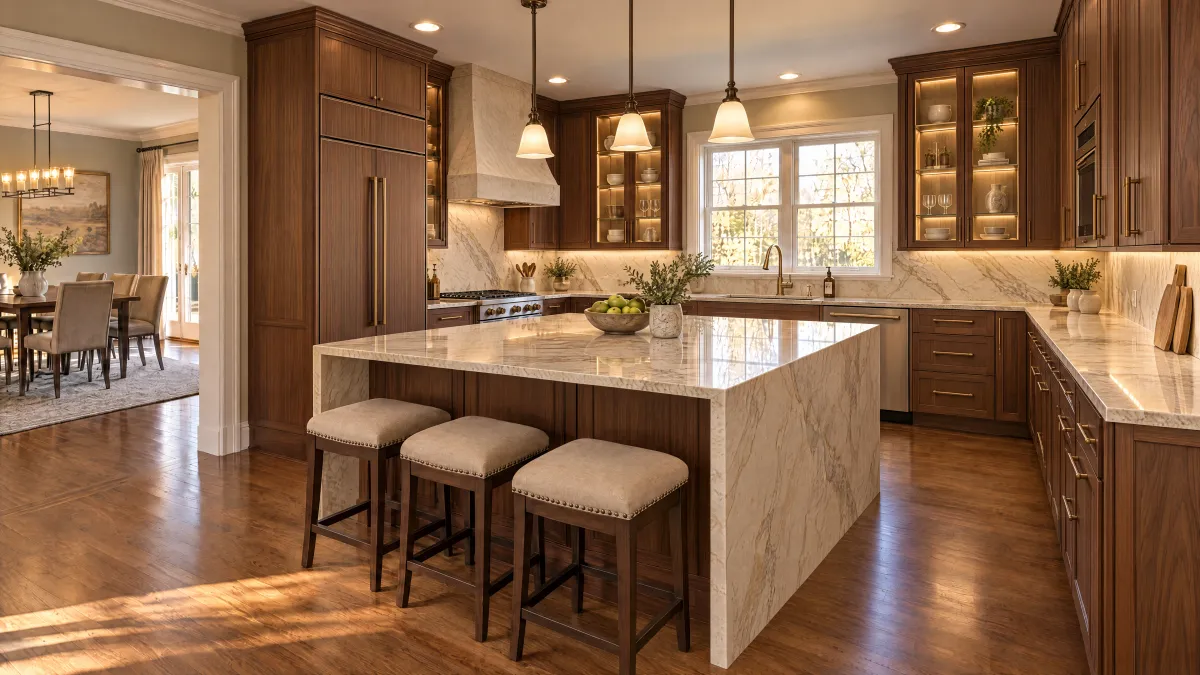
Explain what you mean by curved
For a Tulsa kitchen island or serving counter, a curved line on a floor plan leaves more than one possible construction. A flat top can have a rounded outline; a vertical face can wrap around an island end; a surface can change direction through a formed bend. Ask the designer to show the intended result in plan and in a side or section view before comparing prices.
Corian's explanation of curves distinguishes shaping its solid surface with woodworking methods from thermoforming material made flexible by heating. These are product-specific capabilities, not a claim that all countertop materials bend or that every curved drawing requires heat forming.
Mark the part of the design you actually value: a rounded traffic-side outline, a wrapped visible end or another three-dimensional feature. Ask the fabricator whether the same useful result can be achieved by a simpler supported alternative. Compare the complete designs without assuming one method is cheaper, safer or more durable.
Bind the shape to the actual material selection
The manufacturer's thermoforming bulletin explains that formability varies with the color or aesthetic. Successful work in a different color does not establish the result for your selection. Have the fabricator identify the exact solid-surface product, color, thickness and current technical document it will use to evaluate the proposal.
Ask what supports the proposed shape: relevant prior work, a material-specific assessment or a trial piece. A flat color chip answers a different question from a formed sample. If a sample is proposed, agree on its purpose and any charge before it is made. Record whether it demonstrates the exact material and shape or only illustrates the general idea.
Keep fabrication limits with the specialist. This worksheet gives no heating temperatures, bending radii, mold designs or construction procedure. A catalog's general shaping capability is not authorization to heat, bend or modify material at home.
Compare the complete formed and unformed alternatives
Request a drawing that distinguishes the horizontal deck, curved face or return, support arrangement and any separate pieces. Ask the fabricator to identify expected joints and explain their appearance. Thermoforming does not automatically make an assembly joint-free; the technical bulletin allows for formed pieces subsequently being joined.
Have the cabinet supplier and fabricator agree where the finished surface will sit and what cabinet parts remain behind it. Review door and drawer operation, appliance service access and how the proposed finish meets adjoining surfaces. Retain a cabinet end or backing part until the providers confirm what the accepted assembly actually requires.
For a conventional waterfall end, the cabinet-end and waterfall comparison may answer the broader scope question. A counter-to-wall cove is another separate detail, covered by the solid-surface backsplash-joint worksheet. Here, keep the focus on whether the chosen three-dimensional counter feature is documented and worth its complete package.
Set the acceptance step before ordering related parts
Ask the provider to itemize design development, any agreed trial piece, fabrication, finishing, delivery and installation. Identify what is provisional and what becomes fixed after the accepted sample or drawing. Record who contacts you if the selected material cannot achieve the agreed result and how an alternative would be proposed before related cabinets or surfaces are released.
Give the installer the proposed finished-piece dimensions and access route for review. Do not presume the most visually continuous option can reach the room in one piece. Keep handling, joining and support decisions with the responsible professionals, and have the offer describe their confirmed approach.
Use Tulsa's Permit Center to route any affected building or trade questions for a City property. Ask the professional to confirm the applicable scope and authority; nearby municipalities and county properties have their own routes. Selecting a formed counter establishes no permit exemption or project approval.
Keep the accepted fabrication package with the Tulsa kitchen plan. An attractive shape becomes a useful purchasing decision when the material, evidence, interfaces and complete quoted work describe the same result.
Your decision worksheet
| Check | Record before choosing |
|---|---|
| Shape | Plan and section identify flat areas, rounded outlines and formed parts. |
| Color | Exact product, color, thickness and applicable technical reference. |
| Proof | Relevant fabricator evidence; sample purpose, limits and any agreed fee. |
| Parts | Joined pieces, cabinet interfaces, support and access professionally resolved. |
| Offer | Development, fabrication, finishing, delivery and installation identified. |
| Release | Accepted sample/drawing, remaining questions and change-approval step. |
A worked buying example
Hypothetical example: a Tulsa homeowner likes a curved island rendering. One quote describes a rounded flat top, while another includes a formed vertical return. The selected patterned material has not been tested in that shape. The buyer asks for distinct drawings and the fabricator's evidence, then compares the supported alternative and full package before approving cabinet interfaces. A photograph of a different color does not close the unresolved question.
Questions to settle before ordering
Does every curved countertop require thermoforming?
No. Clarify whether the design is a flat shaped outline, a profiled edge or a surface bent into another form. Have the fabricator identify the actual method for the selected product and design.
Does an earlier successful curve prove any color will work?
No. Corian’s technical guidance says formability varies by aesthetic. Ask the fabricator to assess the actual selection and document the evidence before relying on another project’s result.
