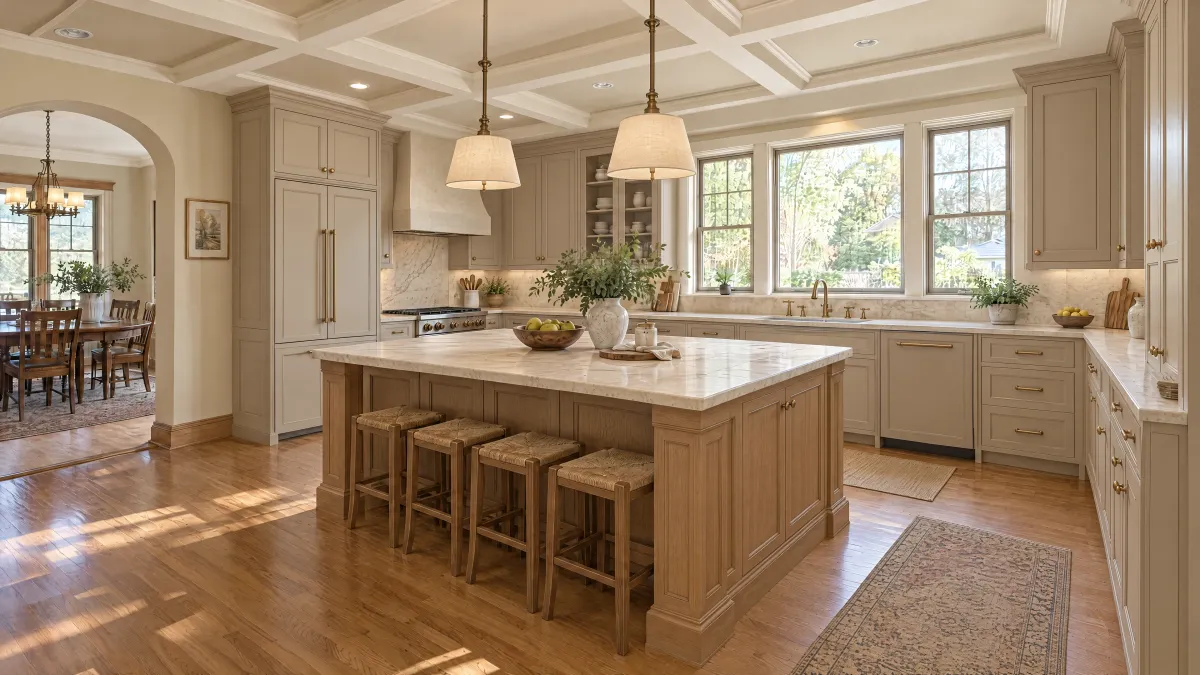
Request two complete island alternatives
For a Pittsburgh kitchen, compare the full island with a finished cabinet end against the full island with the proposed waterfall treatment. Keep the cabinet arrangement and other countertop choices consistent unless a provider identifies a necessary change. A separate stone add-on price may not explain everything the alternative affects.
Begin with the Pittsburgh kitchen planning guide for the broader project. Here, draw the visible end treatment for each option and have the providers identify the actual parts and work. The goal is an understandable purchase comparison, not a homeowner fabrication plan.
Show where the cabinet and stone meet
Ask the cabinet supplier and fabricator to review the actual interface together. Identify any cabinet finish part that remains necessary and any part the revised design changes. Use the selected cabinet specification rather than assuming a decorative treatment can simply replace another component.
Have the fabricator explain the proposed material appearance, piece orientation and joints using the actual selection and its approval process. Ask about any design, support, access or installation constraints it identifies. This worksheet does not prescribe structural support, overhangs, mounting or seams; those require the responsible provider’s project-specific design.
Tie the price to an accepted design
The FTC recommends written estimates describing work and materials as well as price and timing. Request both complete alternatives with their inclusions and exclusions. Ask who owns each interface, what needs to be ready for measurement and how an unresolved condition affects the offer.
For its products, Cambria describes final-measurement preparation involving installed cabinetry and relevant fixtures. Confirm the actual fabricator’s requirements for your chosen island. Keep preliminary visual and price decisions separate from authorization to fabricate, then retain the accepted drawing and material selection with the final quote.
| Check | What to record |
|---|---|
| End treatment | Describe the cabinet-end and waterfall alternatives. |
| Extra piece | Identify each additional supplied piece in the actual offer. |
| Cabinet join | Confirm which cabinet finish parts remain or change. |
| Visual layout | Record material appearance and the fabricator’s approval step. |
| Work owner | Assign the accepted design, interface and installation work. |
| Whole alternate | Compare complete quotes with remaining conditions visible. |
Worked example: the add-on leaves the cabinet finish unclear
Suppose a waterfall option is priced as an extra stone piece, but the cabinet quote still contains its original finished end. Ask whether the accepted waterfall design retains, changes or eliminates that specific finish part. Obtain coordinated revisions rather than deducting it yourself. Then compare the complete island alternatives, including any different installation work the providers identify.
Questions to settle before ordering
Can I subtract the finished panel from the waterfall quote?
Only after the providers confirm the actual assembly and issue the corresponding scope or price revision.
Does this worksheet specify how a waterfall end is supported?
No. The responsible fabricator and other qualified professionals must establish the actual design and installation requirements.
Does the preferred appearance settle the order?
Retain that preference, then resolve the quoted parts, interfaces, final measurement and approval conditions before the affected fabrication is released.
