More of what you love. Less retail markup.
Compare integrated grips, touch-to-open and powered cabinet hardware with a room-by-room opening plan for a premium Detroit kitchen remodel.
Plan my kitchen with a free design & quote
In this guide
Handleless cabinetry is a design choice you feel every time you cook. The clean front is only half the decision. The other half is how you open a heavy pot drawer, close an upper cabinet and reach the trash pullout while preparing dinner.
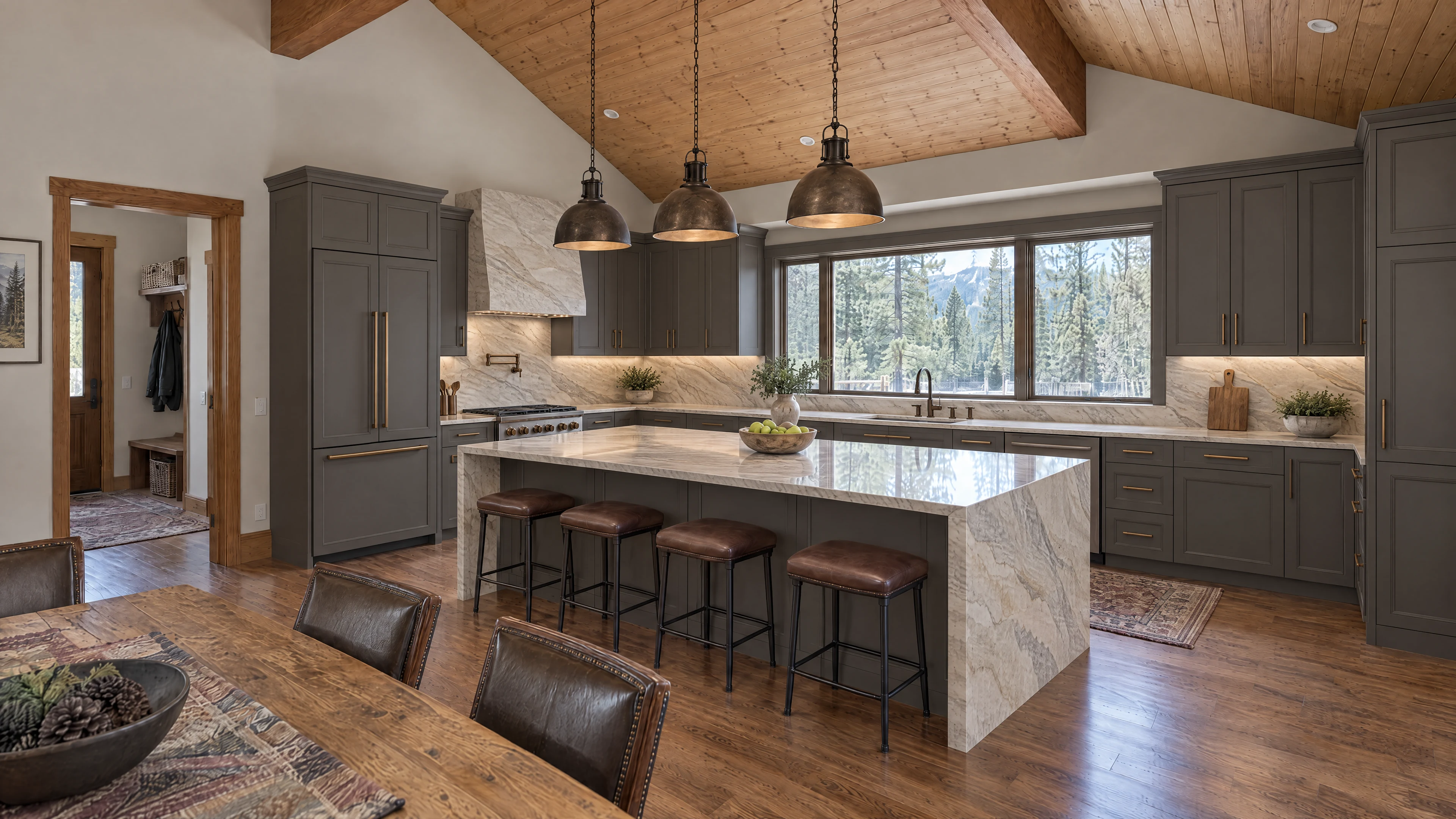
A Detroit kitchen can combine a streamlined appearance with different opening systems where they make sense. You do not have to choose one mechanism for every cabinet. Start by specifying the action you want at each location, then make sure the proposed hardware, front and cabinet construction support it together.
Test movement, not just a door sample
A door sample can show color and texture, but it cannot demonstrate opening effort. Detroit-based Edwards Kitchen & Bath describes cabinet vignettes in its showroom and distinguishes flat-panel cabinetry, soft-close hardware and decorative pulls in its published offerings. That is a useful reminder to compare the physical front and its operating hardware separately during a local visit. Ask ahead whether the exact mechanism you want to test is on display. Detroit showroom and cabinet information.
Bring a simple plan identifying the cabinets you use most: dishes, pots, trash, pantry and everyday glasses. A demonstration matters more when you can connect it to a real position in your kitchen.
If two adults use the room differently, both should try the same sample. One person's comfortable opening action may feel awkward to someone standing at a different height or approaching from the side.
Learn the difference between opening and closing
“Soft-close” describes the closing action; it does not, by itself, mean a cabinet opens when pressed. Touch-to-open may be mechanical or powered, and the available combinations depend on the hardware family and cabinet application.
Blum's official comparison separates mechanical soft-close, electrical opening with soft-close, mechanical opening with soft-close for drawers, and mechanical opening systems for specified other applications. It does not treat all four as interchangeable on every front. Manufacturer motion-system comparison.
Use that distinction when reading proposals. A line saying “soft-close throughout” leaves the handleless opening method unresolved. Ask for an opening and closing description for every cabinet type, with the exact hardware identified in the final specification.
Compare the systems by daily use
| Approach | What you physically do | What to test before selecting |
|---|---|---|
| Visible pull or knob | Grasp hardware and pull | Grip comfort and neighboring-handle conflicts |
| Integrated grip or recessed rail | Reach a designed grip area | Finger access under the counter and beside tall units |
| Mechanical touch-to-open | Press the front to release it | Reliable opening and closing with a representative load |
| Powered opening | Activate the specified powered mechanism | Trigger behavior, power requirements and normal manual operation |
| Mixed system | Use different actions in different zones | Whether the differences feel natural and predictable |
A mixed plan can keep an island visually quiet while giving tall storage an obvious grip. Conversely, repeating one action across several frequently used drawers may be more comfortable than changing systems for aesthetic reasons alone.
Draw an opening map
Print the elevations and label each moving front with its action: pull, grip, press or powered. Include interior drawers hidden behind doors. A front that opens easily may still require an additional movement before you reach the item you want.
Next mark places where someone might lean against a cabinet, carry a tray past it or stand while another person opens it. In a display, try the mechanism from those positions with the salesperson's permission. Observe whether the action feels deliberate and easy to repeat.
Have the designer check neighboring fronts at corners, end walls and appliance doors. The question is not simply whether a front opens alone; it is whether its movement remains workable when the nearby dishwasher or pantry is also in use.
Do not assume an appliance can use the same mechanism as an adjacent cabinet. Refrigerators and dishwashers have their own approved front, handle and opening requirements. Keep their exact specifications in the appliance schedule.
Review what the clean lines require
A recessed grip changes the relationship between the front, cabinet and countertop. A powered system introduces components and an electrical coordination task. Mechanical touch opening still requires compatible hardware and the correct front arrangement.
Ask the cabinet supplier to identify what is included in the cabinet construction and what is added separately. Where will any power component be located? Can it be accessed for service? Who handles adjustments after installation? What manufacturer guidance explains everyday operation if electrical power is unavailable?
Avoid choosing hardware solely from a video of an empty drawer. Ask to try a display with a representative, safely arranged load. The useful result is your observation—comfortable, uncertain or unsuitable—not an assumed performance claim based on the cabinet's price.
Keep the finish in the conversation
When you press a front, you are touching its finish directly. Handleless design therefore deserves a realistic finish review alongside the movement test. Ask for the manufacturer's approved cleaning method and examine a handled sample under ordinary light.
If you prefer a recessed grip, try it on the actual proposed edge profile. Check how comfortably your fingers reach it and whether the location makes sense at the top, bottom or side of that specific front.
The goal is a finish and opening combination you enjoy maintaining. A photograph of uninterrupted cabinetry is an inspiration, not a substitute for using the proposed assembly.
Approve a complete hardware schedule
Your final worksheet should record the cabinet number, front type, opening method, closing method, hardware identifier, finish and any required electrical provision. Add the person responsible for adjustment and the location of the operating instructions.
Price alternatives by meaningful zones: island drawers, tall storage and wall cabinets. This lets you understand the difference between a targeted upgrade and specifying it everywhere. For the rest of the room, connect the schedule to your kitchen storage plan.
Create a kitchen that feels as good as it looks
Start with HIBC's Detroit kitchen design guide, then request free kitchen design before joining. Bring your opening map and the display tests you want to make.
HIBC coordinates design through independent showrooms as an online buying club, with no HIBC product markup. Gold membership is $4,995 initially; the $495 annual renewal is optional, purchased separately and never automatically charged. Cabinetry, hardware, electrical work and installation remain separate costs. HIBC is not an installer. Review the proposed kitchen and comparable product quotes before deciding on membership.
