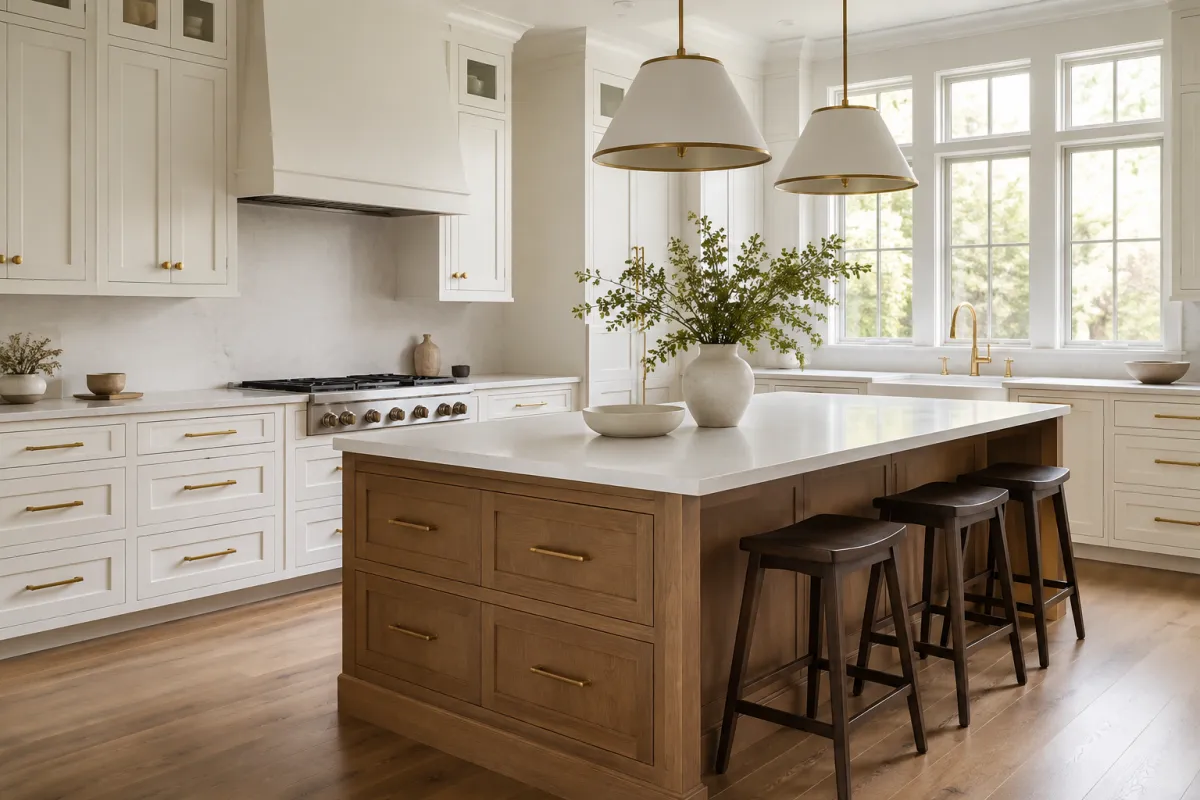
Kitchen Cabinet Storage Planning: Design Around What You Actually Own
A polished kitchen should work as beautifully as it looks. Before you choose every door and handle, decide where your everyday belongings will live. The best storage plan for your household begins with your habits, not with buying every accessory in a showroom.
Take inventory before adding cabinets
List your cookware, dishes, glasses, food containers, countertop appliances and pantry items. Note oversized pieces and anything unusually heavy. Measure items that must fit in a particular location, including their handles or lids. Photographs of your current drawers and cabinets can make a design conversation much more productive.
Separate items you use daily from entertaining pieces and occasional appliances. Decide what you want on the countertop and what you want out of sight. Be realistic about whether you will move a frequently used appliance in and out of storage.
Build storage around routines
Walk through making coffee, preparing a weekday dinner and unloading the dishwasher. Where do you reach, turn or carry things across the room? Discuss storage near those activities with your designer, while keeping clearances and the overall layout part of the same conversation.
A preparation area may need knives, utensils, mixing bowls and cutting boards. A cleanup area may need dishes, towels and space for household supplies. A breakfast area may need mugs and everyday food items. These are prompts for your household, not rules every kitchen must follow.
Evaluate accessories with a specific job in mind
Ask to see options for deep drawers, tray dividers, cutlery organization, waste and recycling, pantry storage and difficult corner spaces. Product availability and compatibility depend on the selected cabinet line and configuration. Have the designer confirm what can be included in your particular plan.
For each accessory, ask: What will it hold? Can the intended user reach it comfortably? What usable space remains inside? How does it open when nearby doors, drawers or appliances are in use? Request current specifications rather than relying on a display that may differ from your selection.
Choose where to invest
Prioritize the storage features you will use repeatedly. If your budget is tight, compare a simpler cabinet configuration with selected organizers against a fully equipped alternative. Ask which accessories must be selected with the original cabinet order and which could potentially be added later.
Do not assume every future addition will fit. Get compatibility and installation requirements confirmed before treating an upgrade as an easy later purchase. Include the accessory, any required cabinet changes and installation in the comparison.
Review the plan cabinet by cabinet
On a copy of the layout, write the intended contents of each cabinet. Check that all essential items have a home and that you have not assigned the same space twice. Review waste storage, cleaning supplies and frequently handled items with household needs in mind.
Finally, compare the written order with your storage notes. Attractive renderings may not show an omitted insert or a different drawer arrangement. Ask for clarification before approval rather than discovering the difference during installation.
HIBC helps homeowners access independent showroom design and confidential wholesale pricing, without adding a HIBC product markup. Request your free kitchen design and confidential quote. Share the storage frustrations you want solved so the conversation starts with how you live.
