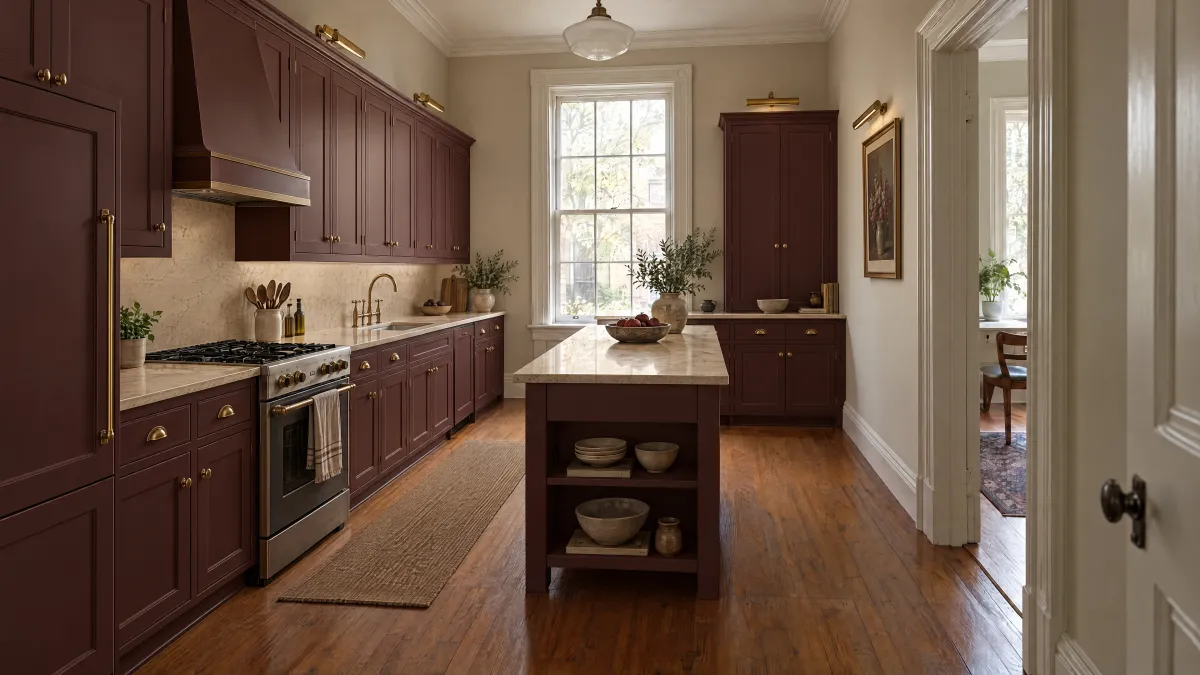
Treat the two cabinet runs as separate decisions
Keeping upper cabinets while replacing the lower run can be worth exploring when the useful storage and appearance above still meet your needs. Ask a qualified professional to assess the retained units and their mounting, then describe exactly what the base-cabinet proposal changes. The fact that an upper cabinet looks satisfactory does not establish its condition.
Begin with the Charleston kitchen planning guide for existing, removed and proposed elements. Mark the retained upper run clearly so a replacement quotation does not quietly assume either its removal or its repair.
Compare the interfaces the partial job creates
Review how the new base arrangement relates to the upper run, appliance positions, countertop, backsplash and adjoining trim. Ask the designer and installer to identify alignments that matter to the proposed result. A matching door name is not enough to establish matching dimensions or appearance across different products.
Have the supplier identify available product options without promising a match to an older finish. Ask for the exact samples and specifications you will approve. Separate intentional contrast from an attempted match so both proposals are pricing the same visual decision.
Include protection and restoration in the choice
Ask who protects the retained cabinets and finishes, what adjoining work is included and which conditions require further assessment. For an affected pre-1978 home, EPA warns about hazardous dust from disturbing lead paint and recommends lead-safe certified help. Do not infer paint condition from the home’s location or appearance.
Compare the full partial-replacement scope with any complete-replacement alternative using the same known conditions. Keep investigation, protection and restoration visible. If removing the uppers would change the construction or property-review scope, have the responsible professional confirm that consequence separately before treating the alternatives as interchangeable.
| Check | What to record |
|---|---|
| Keep | Identify the upper units and finishes proposed to remain. |
| Assess | Name the professional checking retained condition and mounting. |
| Change | Describe the base run and appliance arrangement. |
| Interface | List countertop, wall-finish, trim and alignment decisions. |
| Protect | Assign protection and any restoration of retained elements. |
| Compare | Price equivalent confirmed scopes, keeping open conditions visible. |
Worked example: new drawers below familiar upper doors
Suppose the homeowner wants a new drawer-based lower run but likes the existing uppers. Ask whether their condition supports retention and how the lower layout will relate to the visible lines above. Compare a deliberately coordinated new finish with an attempted match using actual samples. Include the wall-finish and protection work that each option requires rather than assuming a smaller cabinet order automatically means a simpler complete project.
Questions to settle before ordering
Does retaining uppers always reduce the complete cost?
Compare the documented alternatives, including protection, interface work and any needed repairs. A smaller product order alone does not settle the total.
Can new doors be guaranteed to match the old finish?
Only the provider can confirm what it offers. Approve the actual samples and terms rather than a name or photograph.
Does this guide determine property review requirements?
No. Use the actual address and proposed work with the responsible local authority and qualified project professionals.
