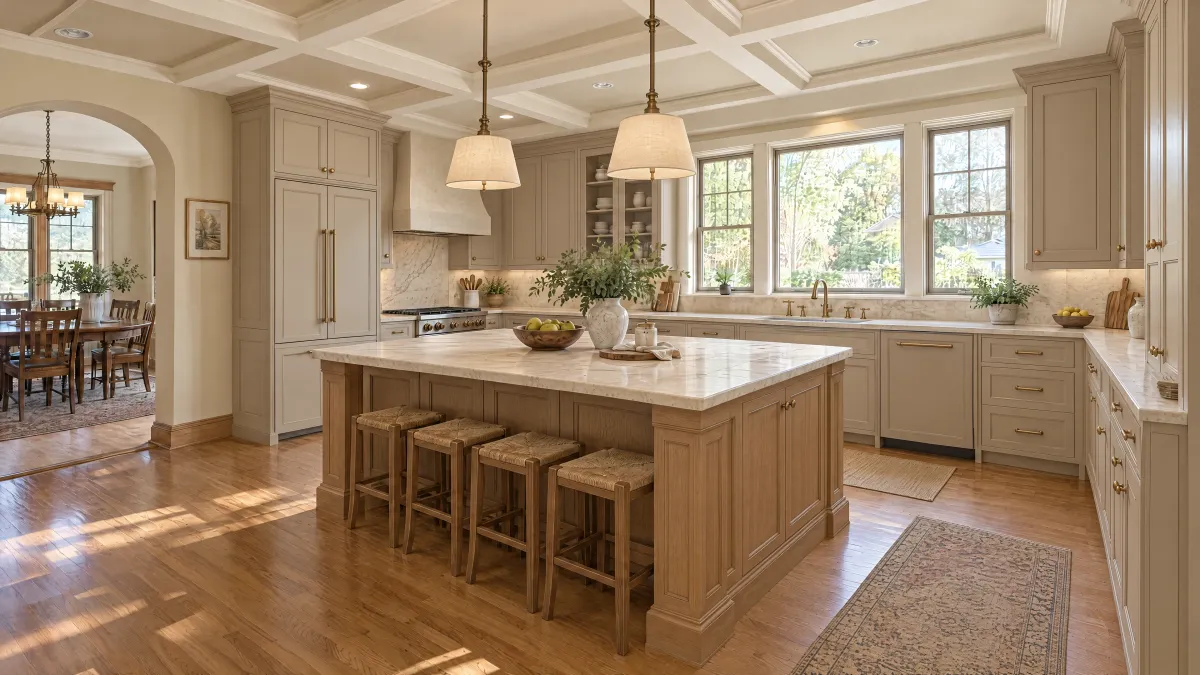
Give one upper cabinet a specific task
For a Syracuse kitchen, choose one wall cabinet whose current storage is difficult to use. List the few items you want there and how often you retrieve them. Distinguish seeing an item from comfortably getting it out and returning it. That task list is the starting point for comparing fixed shelves with a pull-down fitting.
Kesseböhmer's iMove overview describes shelves that travel downward and in front of a wall cabinet, with single and double versions. This illustrates a different operating path from fixed shelving; it does not prove that a particular fitting suits your cabinet or household.
Compare the whole movement with the intended contents
Ask the provider for a suitable demonstration following its operating instructions. Observe the sequence from opening the cabinet to bringing the fitting down, retrieving an item, returning the fitting and closing the door. Each regular user should assess the relevant steps. Use only demonstrator-approved contents and loading; an empty display does not settle how the proposed arrangement will feel in everyday use.
Compare the same items with the fixed-shelf option. Record which objects have a usable position after accounting for the fitting and its moving parts. A pull-down may change how you reach the contents while changing the space available for them. Keep both observations visible instead of assuming every added mechanism increases useful capacity.
Check the space below and in front
Have the provider show the fitting's full operating path on the proposed elevation. Include the cabinet door, countertop objects and anything else beneath that path. Ask whether the arrangement works with the way the counter is normally used, not only with a completely empty counter.
The manufacturer's US document library includes iMove technical information. Have the cabinet supplier and installer use the documents for the exact offered configuration to confirm cabinet suitability, mounting, permitted contents and operating conditions. Keep those technical decisions with the responsible professionals.
Keep the choice tied to the person and the task
Choose the supported option that makes the priority items practical to retrieve and put away. If neither works comfortably, ask the designer whether those items belong elsewhere in the kitchen. A specialty fitting need not be the answer to every high shelf.
Record the selected cabinet, fitting if any, usable contents and full installation scope with the Syracuse kitchen plan. Ask the project team to confirm requirements for the actual property if associated construction changes. Individual reach needs require an appropriate design review; this comparison does not establish accessibility compliance or universal suitability.
Your decision worksheet
| Decision | Evidence to record |
|---|---|
| Priority contents | List the actual items and who retrieves them most often. |
| Fixed-shelf result | Record usable positions and the retrieval sequence for the same items. |
| Pull-down result | Identify the exact offered fitting and observations from an appropriate demonstration. |
| Moving path | Show the cabinet door, full fitting travel and ordinary counter contents beneath it. |
| Provider confirmation | Record cabinet suitability, permitted loading and installation responsibilities. |
| Selected task solution | Choose the confirmed arrangement or move the priority items to a better location. |
A worked buying example
Hypothetical example: a homeowner wants everyday mugs in an upper cabinet. A pull-down demonstration makes the retrieval sequence clear, but the proposed path conflicts with an appliance normally stored below. The designer compares another cabinet location with a fixed-shelf arrangement for less-used items. The homeowner chooses a specific task solution after the provider confirms the selected configuration.
Questions to settle before ordering
Does a pull-down fitting fit any wall cabinet of similar width?
Have the provider check the exact cabinet construction and fitting documents. Outside width alone does not establish compatibility or installation requirements.
Is a pull-down automatically the best choice for limited reach?
Evaluate the complete supported movement with the people using the kitchen and obtain appropriate professional design input for their needs. A product category is not a universal accessibility solution.
