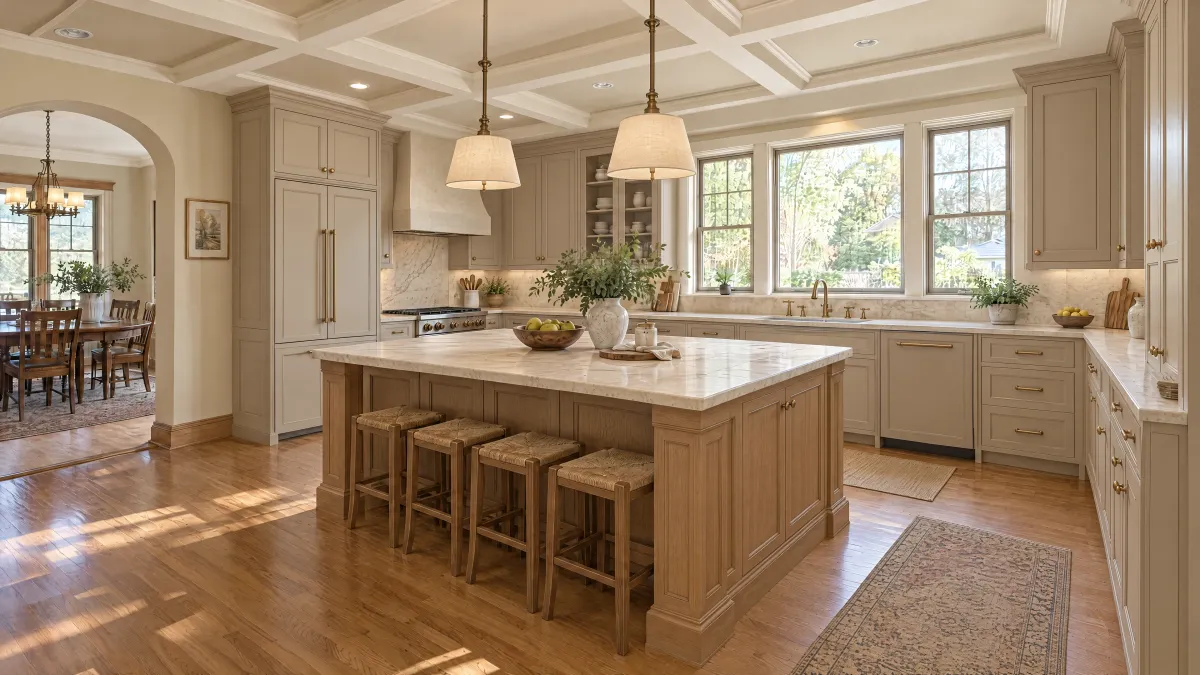
One visual scheme may need two product records
When a Sarasota-area kitchen opens toward a lanai, it is natural to want the counters to look coordinated. Start by marking the interior and exterior surfaces separately on the drawing. Ask the fabricator to identify the exact material, product line, finish and permitted application for each zone before comparing the combined price.
A color name or similar sample does not establish that two products share exposure limits. Nor does a roof automatically settle the classification of the proposed installation. Describe the actual location and ask the manufacturer or qualified provider to assess it against the selected product documents.
Check the surface terms before promising a match
Cambria's published warranty applies to specified interior uses and excludes outdoor and partially exposed outdoor installations. That is a product-specific reason to check a proposed kitchen-to-lanai extension; it is not a rule about all quartz products.
Caesarstone's published Outdoor residential terms concern its Outdoor surfaces and a defined residential application. They do not extend that coverage to every quartz product. Ask for the current document applicable to the exact offer and property use, especially for a condominium or rental; do not assume a single-family owner-occupied document answers it.
Compare the actual indoor and exterior samples together under the relevant lighting, keeping each product identifier attached. Decide whether you want a close visual relationship or an intentional contrast. Obtain the provider's answer about the selected pair; this guide promises neither an exact match nor local availability.
Quote the boundary and the work explicitly
Have the qualified fabricator and project professionals define each surface's support, edge, joint and installation details. If the drawing suggests an uninterrupted counter, ask how the actual construction will be handled. A coordinated appearance does not authorize one unsupported slab or erase necessary joints.
Request separate scope lines for the two zones and their interfaces, including affected cabinets, fixtures and trade work. Keep the product warranty and fabrication/installation responsibilities identifiable. For a reused fixture, use the Sarasota sink-reuse worksheet alongside these material records.
Confirm the building authority and any property-management review for the actual address. Sarasota County's permitting resources are a starting point for County projects, not approval for work in every municipality or association. Keep drawings and private property documents within your project team.
Your decision worksheet
| Check | Record before ordering |
|---|---|
| Zones | Mark indoor and exterior locations, exposure questions and property use. |
| IDs | Exact product line, design and finish for each surface. |
| Samples | Identified sample pair and accepted visual relationship. |
| Work | Professional support/joint details and separately described fabrication and installation. |
| Terms | Applicable product documents, provider answers and unresolved approval questions. |
A worked selection
Hypothetical example: a Sarasota homeowner likes an interior quartz sample and wants the same appearance on a covered lanai. The interior product's terms exclude that application. The buyer asks for a supported exterior candidate, compares the two samples together, and approves separate product and installation records. The design stays coordinated without treating the original sample as exterior approval.
Questions to settle before ordering
Can a matching color name establish outdoor suitability?
No. Verify the exact product and application documents for each zone, independently of appearance.
Does coordinated appearance mean the counter must be one continuous piece?
No. Qualified professionals determine the construction and required joints. Agree on the visual and installation details before fabrication.
