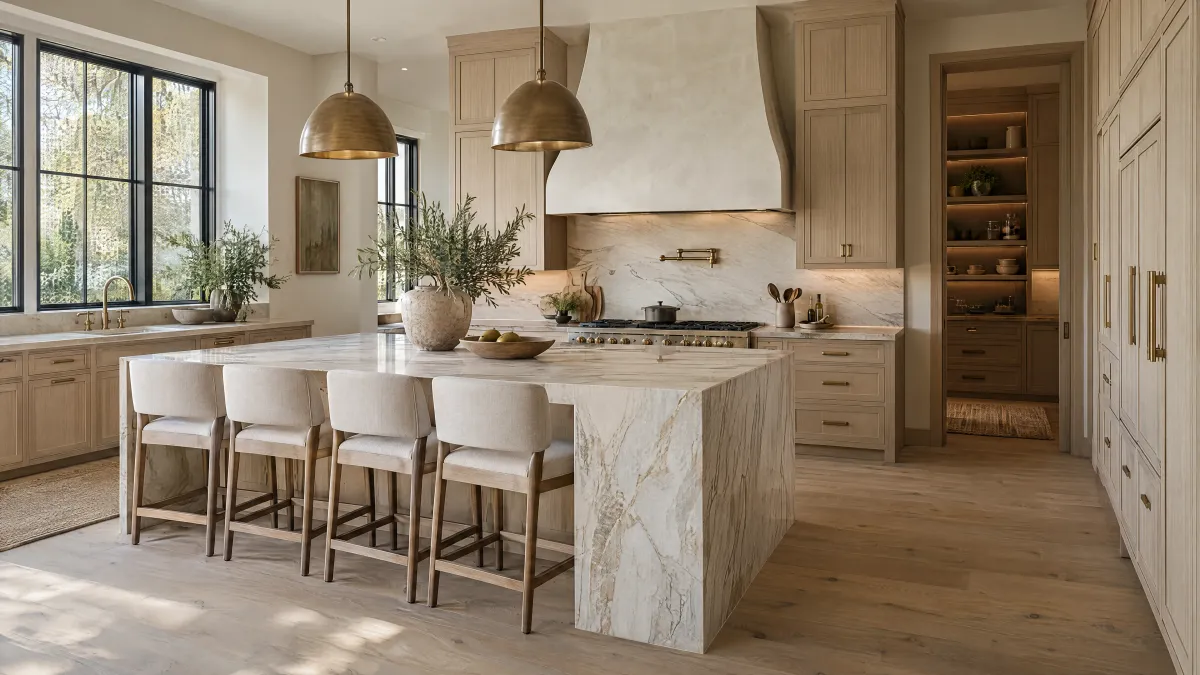
Kitchen storage planning · San José
Choose waste-storage cabinets around the way you actually sort
A kitchen waste pullout works well when the containers match your collection routine and fit the cabinet's usable opening. For a San José home, settle the sorting plan first. Then compare framed and frameless cabinet options using the dimensions and hardware requirements of the actual pullout you want.
Request a free initial kitchen review with a photo of the current sink and waste area, a rough layout and the containers you use. Those details give a designer something more useful than a request for “more storage.”
Start with San José's residential collection guidance
The City's residential organics guidance directs food scraps and food-soiled containers into garbage, where organics are separated for composting at a processing facility. They belong outside the recycling and yard-trimmings streams. This is a San José residential program distinction; confirm the rules for your property and collection arrangement.
For cabinet planning, the useful lesson is to avoid buying a multi-bin accessory from a generic sorting diagram. Write down your household's actual streams: garbage, accepted recyclables and any separate collection you choose to maintain. If you home-compost, add the container and transfer routine that work for that practice. Apartment residents should also confirm access and instructions with their property manager.
Count how often each container is emptied and which items create bulk. A large recycling container may help a household with many cartons; another kitchen may benefit more from an easy-to-clean garbage bin beside the preparation area. Let that record guide capacity and placement.
Compare openings, not just cabinet widths
Two cabinets described with the same outside width can leave different usable space for an accessory. Ask the cabinet provider for the clear opening and interior dimensions of the exact unit. Face frames, hinges, drawer rails and other components can affect the opening available to install or remove a pullout.
For a framed cabinet, check the opening through the face frame and whether a center stile or hinge projection affects the chosen hardware. For a frameless cabinet, check the actual box dimensions, door hardware and mounting requirements. Neither construction type guarantees that a particular accessory will fit.
Use the pullout manufacturer's current installation information to compare the required opening, interior depth, usable height and mounting surface with the cabinet drawing. Ask the provider or installer to confirm that combination in writing. A product photo or nominal bin capacity cannot answer those fit questions.
Draw the space around the container
| Planning question | What to record |
|---|---|
| How do you sort? | Actual residential streams and number of containers |
| How much space is usable? | Clear opening, interior width, depth and height |
| What occupies the cabinet? | Pipes, disposal, filters, hardware and service access |
| How does it move? | Door swing or drawer travel and nearby obstructions |
| How do you clean it? | Lift-out route, wipeable surfaces and access below the bins |
| Who confirms fit? | Cabinet provider, accessory model and installer acceptance |
An under-sink location can be convenient, but plumbing and equipment may take the space a bin needs. A dedicated base cabinet may give the accessory a clearer footprint. Compare both options on the drawing before changing cabinet sizes. Preserve access to shutoffs and equipment that will need servicing.
Include the motion of people as well as hardware. Can someone open the waste pullout while another person uses the sink? Does an open dishwasher block the transfer route? Can the full bin lift out without striking the countertop, drawer or nearby handle? Ask the designer to work through those everyday movements with you.
Price the complete accessory combination
Ask whether the quote includes the mechanism, bins, lids, door attachment, hardware and installation. Identify the exact model and replacement-bin information. If a finish-matched front is required, make sure it appears on the cabinet schedule with the intended method of opening.
Compare cleaning access, operating effort and the manufacturer's capacity limits alongside price. A larger bin is useful only if it remains manageable when full and works with the household's emptying routine. Keep recycling guidance separate from product marketing; a symbol or label on a container does not determine what the local program accepts.
Before ordering, ask the designer to mark the chosen unit on the current layout and the installer to confirm the mounting and clearance details. If the accessory changes, repeat the fit check using its own specifications rather than assuming it will fit the same opening.
Bring the storage plan into your kitchen review
Prepare a short brief: collection arrangement, container sizes, preferred location, current frustrations and the exact accessory if you have selected one. Use the Kitchen Quote Check to identify missing product or installation lines, then request your free initial kitchen review.
HIBC coordinates design through independent showrooms. Membership, products and installation are separate. Gold is $4,995 and includes Year 1; optional $495 annual renewal from Year 2 is purchased separately, with no automatic charge. The initial membership is refundable within 30 days if you are dissatisfied and have placed no orders. You can review a design and product quote before joining. Review the current membership offer and membership terms before joining.
