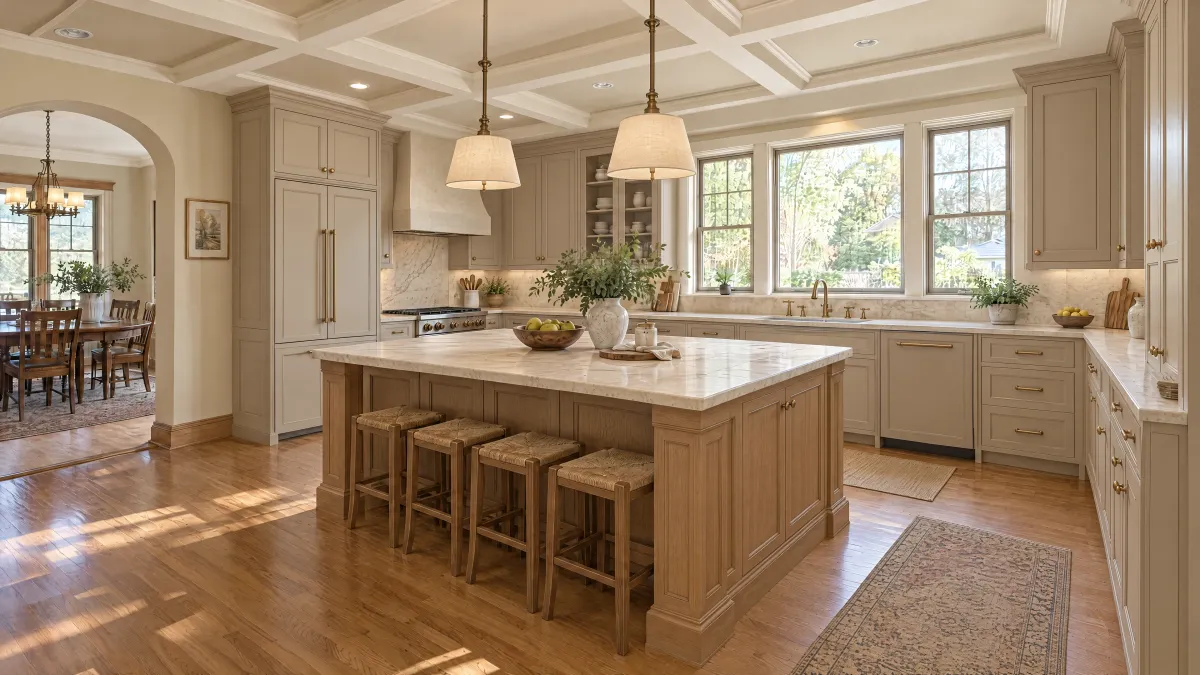
Make sheen a room decision
For a Palm Bay–Melbourne kitchen, start with the view you will see every day: a long cabinet run, the island facing the living area or the doors around the sink. Decide which surfaces should attract attention and which should sit quietly beside the countertop and floor. Then compare matte and gloss candidates in those locations.
REHAU's cabinet-surface references distinguish high-gloss and matte families. Use the distinction to request specific samples. The category name does not identify the same appearance or performance across different materials and manufacturers.
Compare samples in a repeatable way
Request labeled samples of the exact proposed door material, color and surface. Where practical, compare the same color family in the two sheen choices so a major color difference does not decide the result accidentally. If the alternatives use different materials, make that difference explicit.
Place the samples vertically in their intended cabinet areas using a safe temporary display arrangement. View them from the normal standing and seated positions, first with ordinary daylight and then with the kitchen lights you expect to use. Record what attracts your eye, including surrounding objects visible in a reflective sample.
Put the actual countertop and floor samples nearby. Add the handle finish and show the ordinary objects that will remain on the counter. The goal is a useful filled-room comparison: a sheen you enjoy beside a clear display may look different to you when the coffee equipment and other daily items are present.
Choose where the preferred effect belongs
Review a small area and a larger repeated run before selecting one sheen everywhere. Ask the designer how the selected front relates to exposed ends, trim and appliance panels. Record the intended treatment of each visible component rather than assuming that matching color names produce the same sheen.
If the household prefers a mix, mark its boundaries on the elevation. Keep the reason specific, such as liking a reflective island front while preferring a quieter surrounding run. Request the relevant product care instructions separately; a visual preference is not evidence of fingerprint resistance, repairability or durability.
Save the labeled samples and the location notes with the Palm Bay–Melbourne kitchen plan. Project professionals confirm construction and approval requirements for the property's actual jurisdiction. A shared market label does not determine those requirements or guarantee that a particular surface is offered locally.
Your decision worksheet
| Decision | Evidence to record |
|---|---|
| Main viewing position | Identify the cabinet area and everyday standing or seated view being compared. |
| Sample identity | Record each exact material, color, sheen and sample reference. |
| Lighting comparison | Note your preference in ordinary daylight and the intended kitchen lighting. |
| Filled-room view | Compare neighboring surfaces, handles and the objects normally left on the counter. |
| Finish boundaries | Mark fronts, ends, trim and panels; identify any deliberate change in sheen. |
| Final visual choice | State the preferred effect and retain product-specific care questions separately. |
A worked buying example
Hypothetical example: a homeowner favors gloss in a clear showroom display. At home, a labeled sample beside the proposed island surface reflects objects in the adjoining room. The household likes that effect on a small front but prefers matte across the longer run. The designer marks the finish boundaries and confirms the corresponding end-panel treatment before ordering.
Questions to settle before ordering
Is one photograph enough to choose cabinet sheen?
Use it to narrow the options, then compare identified samples in the relevant room views and lighting.
Does matte automatically mean easy care or invisible fingerprints?
No general conclusion follows from the sheen name. Request the actual product’s characteristics and care instructions.
