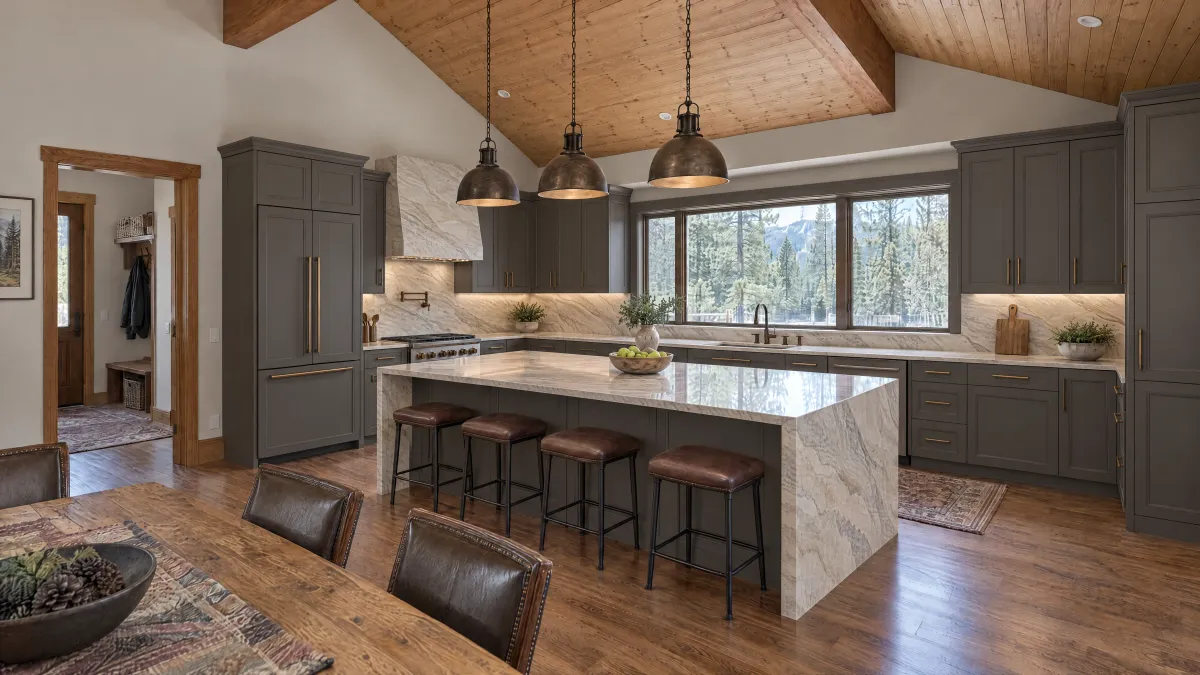
Describe what you want to keep and change
For a New Orleans kitchen, start the repaint, reface or replace decision with a simple inventory. Mark the cabinet boxes, doors, drawer fronts, interior fittings, counters and adjacent finishes as keep, change or unresolved. Then list the problems you want the project to solve: appearance, worn components, storage, access or layout.
These are separate questions. A new finish may answer an appearance preference while leaving an inconvenient layout unchanged. Replacing a front does not establish that the box is suitable to retain. Have a qualified provider assess the condition and compatibility of the parts you intend to keep.
Ask providers to define the retained scope
For each proposal, ask which surfaces are prepared or covered, which components are replaced, what remains untouched and how the edges between old and new work are finished. Terms such as refacing can describe different scopes from different providers. Compare the written operations and exclusions rather than relying on the service label.
If a cabinet is loose, damaged or affected by moisture, identify who investigates and resolves that issue before cosmetic work is approved. Record observations without diagnosing their cause. Where the planned work would disturb paint in a pre-1978 home, EPA recommends lead-safe certified help. The age of the home is a reason to investigate the affected surfaces, not a test result.
Keep transitions and responsibilities in the price comparison
A retained-cabinet proposal should explain how counters, appliances, plumbing connections and adjacent finishes are handled when affected. Ask who verifies the final dimensions and who is responsible if a proposed new component does not fit an existing part. Do not assume the cabinet supplier also performs demolition, finishing or trade work.
Create a second, clearly bounded replacement option if retaining the boxes leaves an important problem unresolved. Compare the complete scope and disruption, including separately arranged services. Final construction, permit and trade requirements depend on the property and work; confirm them with the actual jurisdiction and responsible professionals. A city-wide planning guide cannot approve an individual project.
Your decision worksheet
| Check | What to confirm |
|---|---|
| Retained parts | List the boxes, fittings and adjacent materials intended to remain. |
| Condition evidence | Record professional findings and unresolved concerns. |
| Desired result | Separate appearance, storage, access and layout objectives. |
| Surface treatment | State precisely what is prepared, covered, refinished or replaced. |
| Transitions | Identify affected counters, appliances, finishes and trade work. |
| Comparison | Compare the retained-scope proposal with a defined alternative, including exclusions. |
Worked example: new fronts, unresolved storage
Suppose the cabinet boxes are candidates for reuse and you like a new door style, but the main frustration is difficult access to stored cookware. Ask the provider whether compatible interior changes would resolve that task within the retained boxes. Request the actual scope and fit verification.
If the desired storage cannot be accommodated, compare a limited replacement arrangement or a broader redesign. The decision should follow the problem you need solved, rather than assuming that new fronts will produce a different layout.
Questions to settle before ordering
Is keeping the boxes always less expensive?
Compare complete, written project scopes. Condition repairs, finishing, hardware, transitions and services may differ; this guide provides no universal cost claim.
Can HIBC confirm that my existing cabinets are sound?
A qualified project professional must assess condition and final fit. You can use the record to organize the questions for an initial buying discussion.
