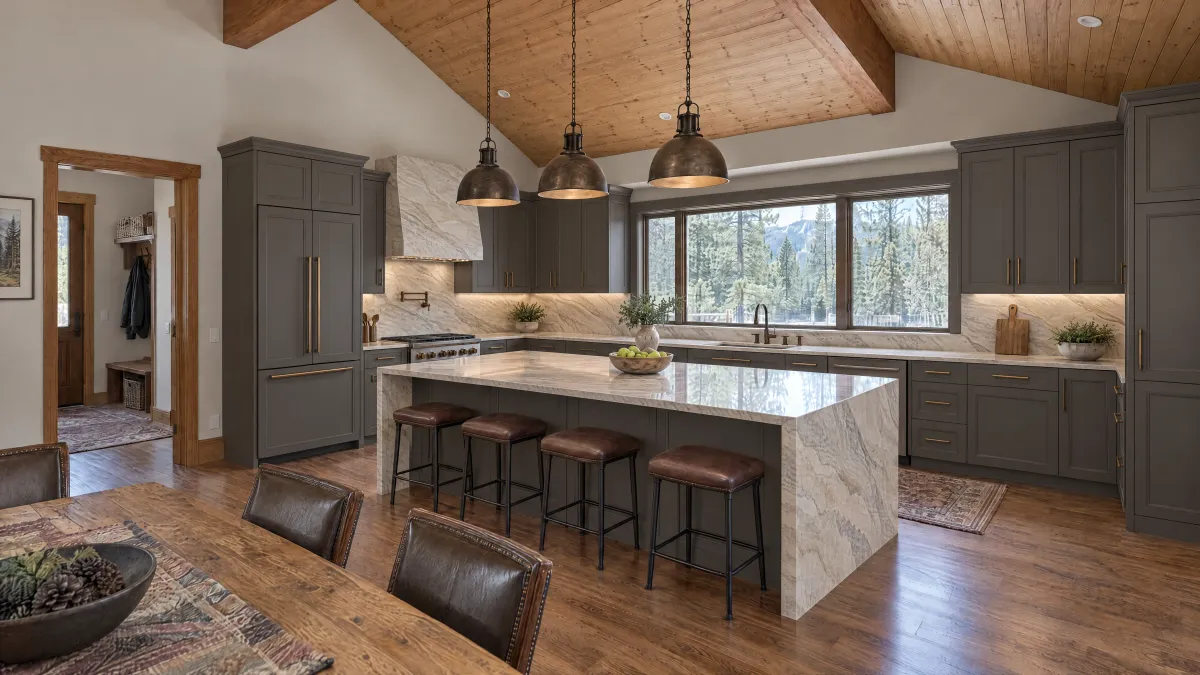
Follow the pot through the whole meal
For a Fayetteville–Springdale–Rogers kitchen, start with two meals you actually cook. Identify which vessel needs water, where you normally fill it, where it cooks and what happens afterward. A pot filler addresses a particular filling task. The rest of the cookware's route deserves its own plan.
Delta's wall-mount example uses folding swing joints and shutoffs at the wall and spout. The mechanism helps explain the buying question: would a dedicated fill point at the cooking area help your routine, and can the proposed fixture be coordinated with the actual range and wall?
Compare a fixture with a complete sink-filling route
Sketch the existing or proposed sink-to-cooking path. Describe what makes that step inconvenient, if anything. Then show the pot-filler option using the same cookware and meal. Keep emptying, draining, washing and returning the vessel on the comparison sheet; adding a fill point does not decide those steps.
Use empty, cool cookware or its measured outline for a planning discussion. Have the designer and plumbing professional assess the actual fixture's extended and folded positions with the range, hood, backsplash and nearby storage. Ask which burners or vessel positions the proposed model is intended to serve, without assuming every pot or cooking location will be reached.
Consider who would use the fixture and how often the relevant task occurs. A feature used repeatedly may matter more to one household than a dramatic focal point used only for an occasional meal. Record your own pattern rather than treating a pot filler as a required part of a premium kitchen.
Compare the full change to the wall
Request an itemized scope for the fixture, plumbing work, wall access, finish restoration and professional installation. Ask the responsible provider to explain the specified shutoff and service arrangements. Keep the chosen finish and exact model with that scope so a later substitution does not silently change the wall detail.
Connect the decision to the Northwest Arkansas kitchen plan. Fayetteville, Springdale, Rogers and surrounding addresses need their own jurisdiction check. Qualified professionals should establish the applicable plumbing and building requirements for the actual property before any work. This comparison supplies no fixture height, connection method or construction approval.
Your decision worksheet
| Decision | Evidence to record |
|---|---|
| Recurring meal | Name two meals, cookware and how often the filling task occurs. |
| Current filling route | Describe the sink-to-cooking step and the specific inconvenience, if any. |
| Remaining cookware route | Show what happens after cooking: draining, washing and putting the vessel away. |
| Fixture reach and rest | Request professional review of extended and folded positions with the actual appliances. |
| Whole wall scope | Record fixture, plumbing, access, restoration and installation responsibilities. |
| Useful result | Choose the pot-filler option or the supported sink route for a stated household reason. |
A worked buying example
Hypothetical example: a household likes the appearance of a pot filler but usually cooks with small vessels filled easily at the adjacent sink. After mapping two typical meals, it finds little change to the filling task and keeps the sink route. Another household with a different recurring task could reach a different decision after reviewing the complete installation scope.
Questions to settle before ordering
Does a pot filler remove every need to move cookware?
Map the entire meal, including draining and washing. A fixture intended for filling does not settle those later tasks.
Can the backsplash installer choose the fixture position from a photo?
Have the designer and qualified plumbing professional coordinate the exact fixture, appliance and wall requirements before the finish detail is finalized.
