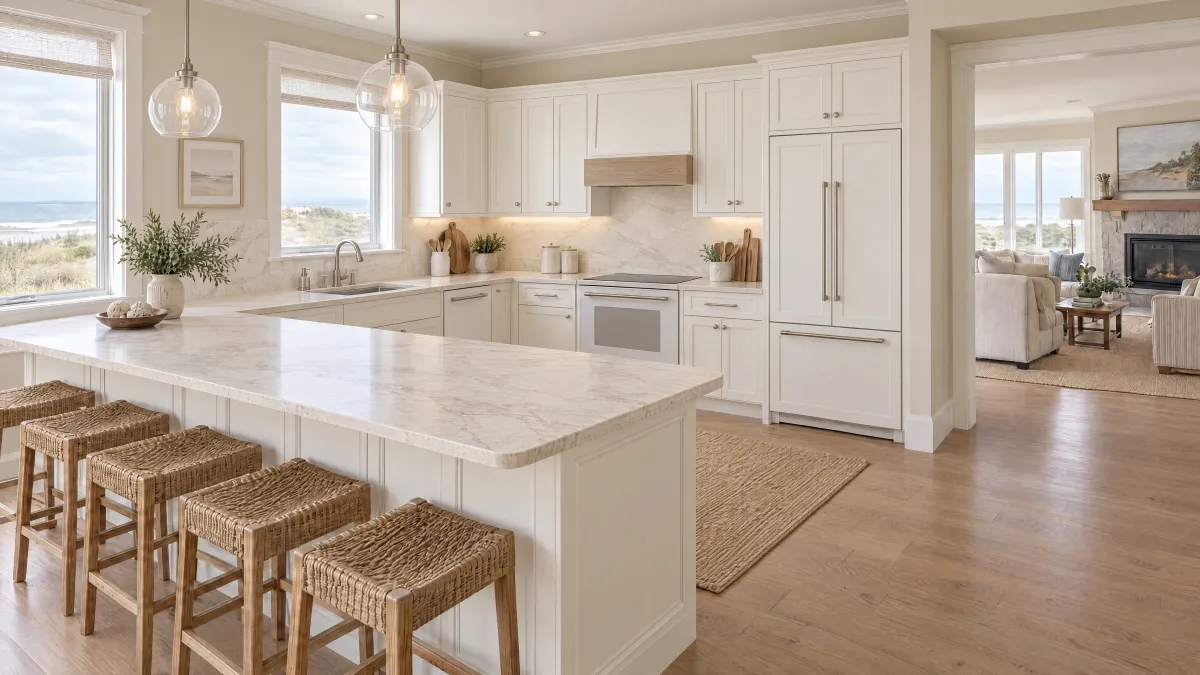
Identify what the tall cabinet still does well
For a Detroit kitchen, list the daily job of the tall unit you might keep: pantry storage, household equipment or another defined use. Check whether the contents are accessible and the arrangement still works for the people using it. Ask a qualified professional to assess its condition and mounting before relying on retention.
Use the Detroit kitchen planning guide for the wider room decision. Mark this individual unit as proposed to remain, then compare a partial replacement with a complete-run alternative. A satisfactory appearance does not establish the cabinet’s condition or its suitability for the new arrangement.
Inspect the joins between old and new
Ask the designer and installer to document how the retained unit meets the new bases, countertop, wall finishes and trim. Check door and drawer movement beside it. Record which alignments matter visually and which dimensions the professionals still need to verify. Keeping one cabinet creates interfaces that a complete replacement may handle differently.
Use the selected supplier’s product documents, such as KraftMaid’s specification guides, to identify the new offering. Compare actual samples where a finish match is proposed. If a reliable match is unavailable, ask whether a deliberate contrast meets your preference instead of treating a similar color name as confirmation.
Compare the whole retention scope
The FTC recommends written estimates that describe work, materials, timing and price. Ask both alternatives to identify removal, protection of retained elements, repairs and adjoining finish work. Keep unresolved condition questions separate rather than assuming that fewer new cabinets guarantees a lower complete cost.
If work may disturb lead paint in an affected pre-1978 home, EPA recommends lead-safe precautions and certified help. Have the responsible professional assess the actual work; do not infer paint status from a Detroit address or the cabinet’s appearance. Avoid destructive inspection solely to complete this worksheet.
| Check | What to record |
|---|---|
| Retained unit | Identify the specific tall cabinet and its storage job. |
| Condition | Record the qualified review and any unresolved limitations. |
| Daily function | List what works and what the new plan must improve. |
| Adjacent fit | Document movement, trim and countertop interfaces. |
| Finish choice | Specify an accepted match or an intentional contrast. |
| Full scope | Compare protection, repairs and replacement work in both offers. |
Worked example: a useful pantry beside unsuitable bases
Suppose the tall pantry still serves the household, but the adjacent base cabinets need replacement. Compare a plan retaining the pantry with one replacing the complete run. Ask how the new drawers operate beside it, how the visible finishes relate and what protection or repair is included. Keep retention conditional until the professional review and adjoining dimensions support the proposed plan.
Questions to settle before ordering
Can a photo confirm that the tall cabinet should stay?
A photo can support planning, but it does not replace an appropriate condition, mounting and fit assessment.
Will new cabinets match the older unit?
Ask the provider to confirm the actual offering and review samples; matching names or photographs are insufficient.
Is this the same as choosing new opening hardware?
No. This decision is whether to retain an entire unit and coordinate it with replacement work. Hardware selection is a separate product choice.
