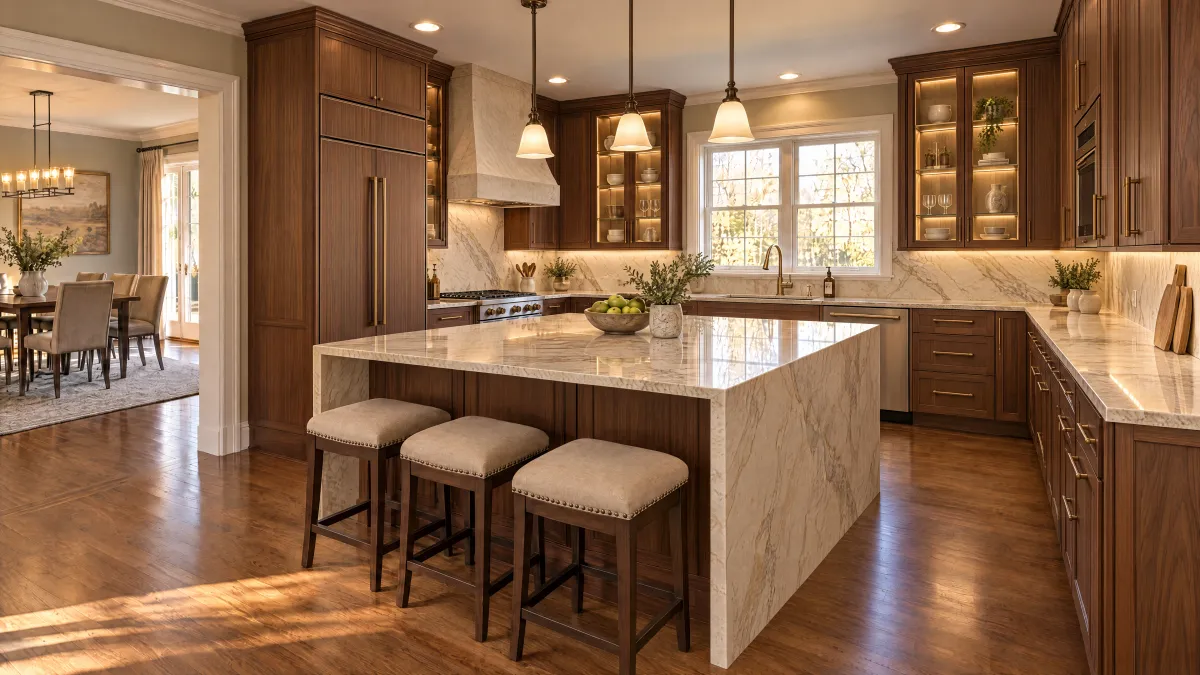
Start with what happens after the wash
For an Atlanta kitchen, record when the dishwasher normally finishes and when someone unloads it. Then note who uses the nearby path during that interval. A drying feature can change the end-of-cycle routine even when the dishwasher occupies the same cabinet opening.
Bosch describes AutoAir on selected models as releasing the door at the end of drying to admit air. Treat that as one documented operating sequence. Compare it with the actual sequence of a candidate without automatic door opening, rather than assuming every machine behaves the same way.
Understand the feature before selecting it
Ask the provider which programs use the feature, when movement occurs, and what options the exact model provides for controlling it. Keep the model’s operating instructions with the comparison. Do not assume a showroom setting is the factory setting or that another model offers the same choices.
Have the designer show the door’s documented position beside the intended aisle, adjacent fronts and countertop. The installer should confirm all required protection, clearance and fitting instructions. This purchasing check does not set a safe opening dimension or substitute for the appliance manual.
Include the everyday load in the discussion. Ask how the manufacturer describes drying for your usual item types and when unloading is recommended. A demonstration of door movement alone cannot verify drying performance, and an unconnected display cannot establish a complete cycle.
Compare two complete end-of-cycle routines
Write a short sequence for each candidate: chosen program, expected completion, door behavior, household circulation and unloading. Consider whether the preferred routine depends on remembering a setting. Record that dependency alongside the feature rather than overlooking it in a list of specifications.
Use the result with the Atlanta kitchen plan. A product feature does not settle electrical, plumbing or building requirements. Have the qualified project team check the actual address and jurisdiction; Atlanta and surrounding communities should not be treated as one approval authority. Choose the routine you understand and can support in the finished room.
Your decision worksheet
| Decision item | Evidence to record |
|---|---|
| Usual timing | Record when the cycle finishes and when the household normally unloads. |
| Documented behavior | Identify exact model, programs, automatic movement and applicable instructions. |
| User controls | Confirm available settings without assuming another model’s options transfer. |
| Nearby room | Show the documented door position, adjacent fronts and circulation on the plan. |
| Load and limitations | List usual item types and distinguish published drying information from display observations. |
| Accepted routine | Keep the selected sequence, installer confirmations and any remaining questions. |
A worked buying example
Hypothetical example: a household usually runs the dishwasher while preparing breakfast for the next day. One candidate opens its door automatically during the documented drying sequence. The family asks the provider to explain the feature and the designer to show the open position near its usual path. It compares this routine with a model that remains closed, choosing after the actual instructions and room arrangement are clear.
Questions to settle before ordering
Does automatic door opening mean every item will be dry?
No. Review the exact model’s drying information, load instructions and program details. Door movement alone does not prove a result.
Can I assume the feature can be switched off?
Check the selected model’s instructions and ask the provider to identify its actual settings. Do not borrow another model’s controls.
