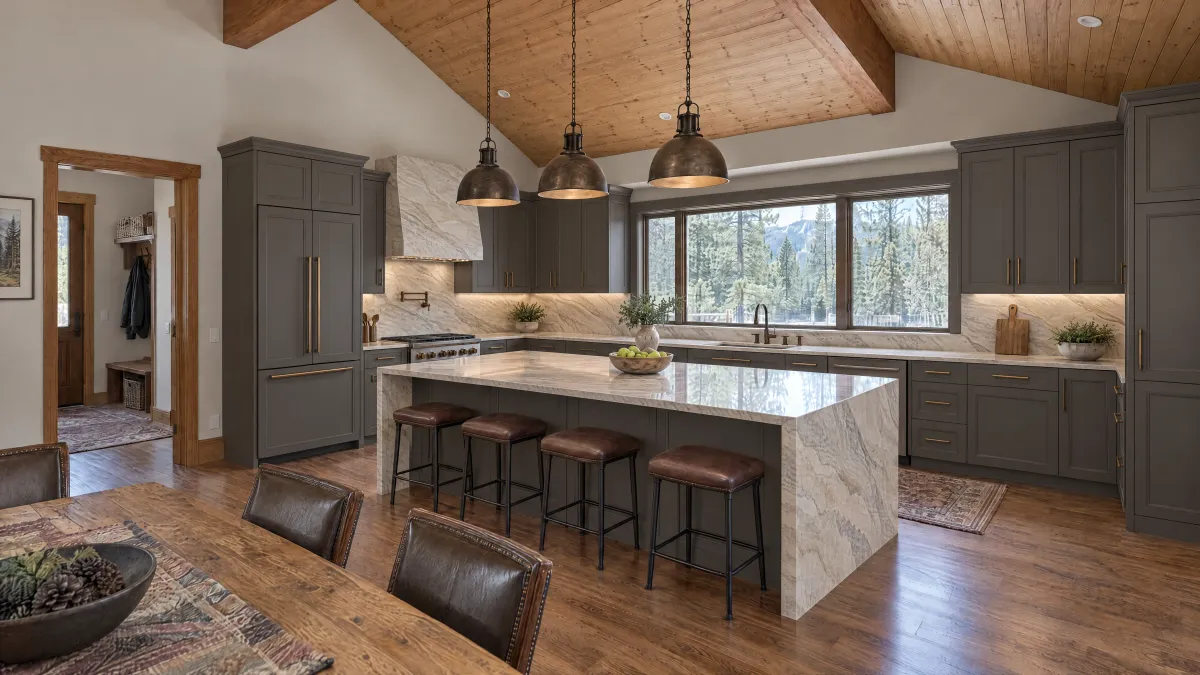
Give the island and perimeter their own schedules
For an Albuquerque kitchen, a second cabinet line may be proposed for the island while the perimeter stays unchanged. Divide the drawing into named zones before comparing that proposal with a single-line order. Record the actual cabinet codes, quantities, required finished faces and storage fittings in each zone.
Use the Albuquerque project brief to keep product purchasing and installation responsibility visible. A mixed-line choice still needs one coordinated kitchen plan. Mark the point where one line's specification ends and the other's begins.
Keep component and finish expectations separate
KraftMaid's construction FAQ shows that component materials and product-line offerings need specific descriptions. Obtain the actual documents for both lines you are considering. Do not infer that a matching style label supplies matching cases, interiors, drawers or hardware.
View the selected finishes together and state whether the intended result is a deliberate contrast or a close match. Ask who supplies exposed panels, trim and the island's visible rear. A color name shared by two offers is not a written commitment to an identical appearance. Keep accepted samples and product identifiers with the zone schedule.
Reconcile the interfaces and the total
Have the designer and installer review finished heights, end conditions and any countertop or appliance interfaces across the proposal. Assign each supplied piece to one order, and identify installation work needed to bring the zones together. Do not leave a connecting detail between two providers' exclusions.
For the single-line and mixed-line alternatives, compare complete product, delivery, installation and applicable tax scope. Record separate order and service contacts if relevant. If membership is part of the comparison, include its cost consistently for the period considered. A lower island cabinet subtotal is not a complete-kitchen comparison.
| Decision item | Write down before choosing |
|---|---|
| Perimeter | Line, cabinet schedule, finish and included options. |
| Island | Separate line and complete visible-face and storage schedule. |
| Appearance | Contrasting or matching intent with identified samples. |
| Interfaces | Provider-confirmed transitions and assigned supplied pieces. |
| Complete offer | All orders, services and unresolved costs reconciled. |
Worked example: the island alternate excludes its rear finish
Suppose a proposed island line has the storage arrangement you want and a lower product subtotal. Its quote covers the cabinet fronts and boxes, while the original single-line proposal also includes the finished rear treatment. Mark the rear finish as an unresolved island item.
Ask the provider to identify the supported parts, appearance and completed cost, then have the installer review the resulting assembly. Compare the revised whole-kitchen total and finish intent. If the alternate needs a different visible joint or trim treatment, decide whether you accept that result before treating the proposals as equivalent.
Questions to settle before ordering
Can two lines use the same finish name?
They may use similar labels, but do not rely on the name to establish an appearance match. Review actual samples and obtain the seller’s written description of the selected finish.
Does this comparison replace the appliance-installation review?
No. Keep model-dependent cabinet and installation checks in the relevant package. Albuquerque’s separate range-hood guide covers that more specific coordination decision.
