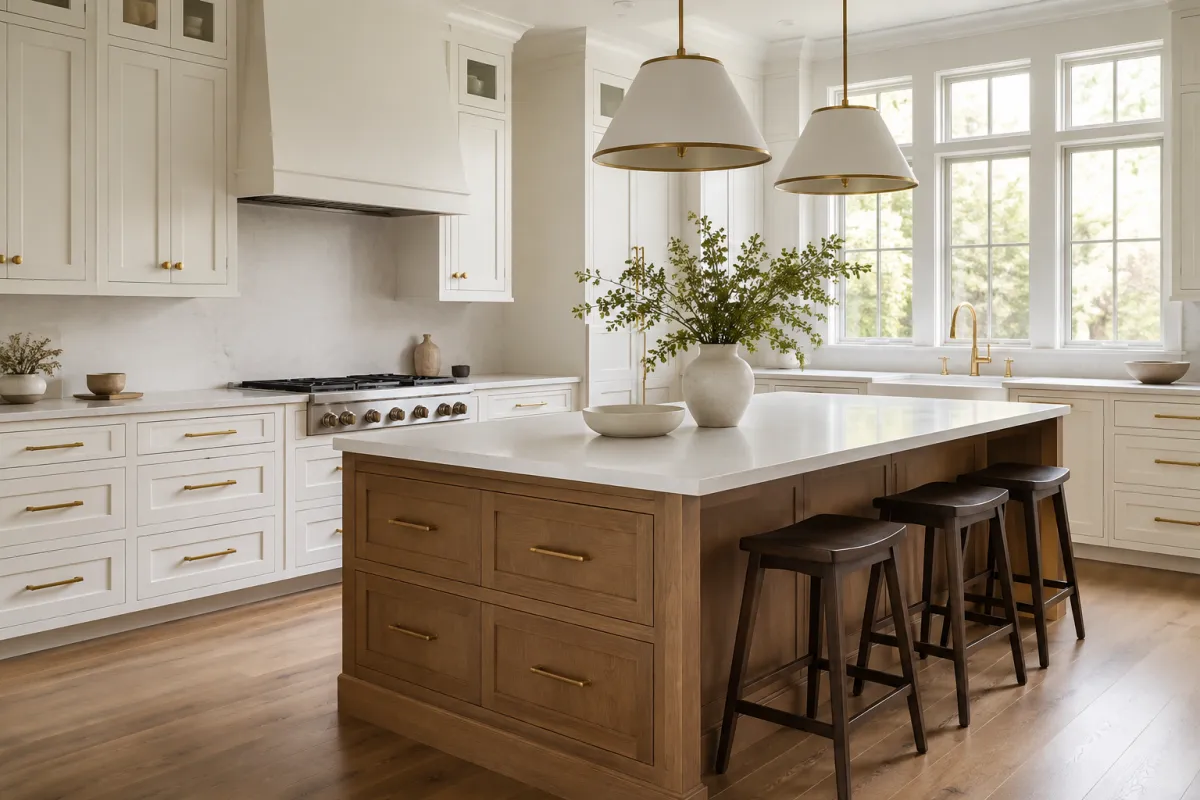
Shaker, Slab or Raised-Panel Cabinet Doors? A Style Decision Guide
Cabinet doors occupy a large part of the kitchen’s visual field. Choosing a style is less about finding a universal winner and more about creating the feeling you want in your home. Start with the broad design direction, then compare real samples and the details of the product being quoted.
Shaker: a framed, restrained look
Shaker-style doors are commonly recognized by their frame surrounding a recessed center panel. That outline gives the cabinetry definition without relying on elaborate decoration. Compare examples with different frame proportions; two doors described as Shaker can still create noticeably different impressions.
If you like a composed look with visible structure, begin here. Review the door with your proposed finish and hardware rather than judging its silhouette alone. Ask the showroom to identify the exact door style name because product labels and variations differ between cabinet lines.
Slab: a simpler visual surface
Slab-style doors present a flat-looking face without the same framed-panel outline. They can create a visually quieter composition, especially when repeated across a run of cabinets. The effect still depends on color, material appearance, hardware and the rest of the room.
Look closely at edge details and how the proposed handles interact with the doors. If you are drawn to minimal hardware or a particular opening approach, confirm that it is actually available in the selected product and included in the proposal.
Raised panel: a more dimensional outline
Raised-panel styles use a shaped center-panel treatment that introduces additional contour. Different profiles can feel more restrained or more decorative, so compare the actual door rather than relying only on the category name.
Review the door alongside planned trim, island details and adjoining rooms. If you enjoy a more layered composition, ask the designer to show how those elements work together without leaving decorative choices to be resolved at installation.
Separate appearance from specifications
A style label does not tell you everything about materials, cabinet construction, hardware, service terms or price. Request the written specifications for the precise product being considered. Avoid treating two visually similar samples as equivalent offers without checking the details.
Compare the same kitchen layout in your shortlisted styles when possible. Identify whether a different door or finish changes the quoted cost, available sizes or accessory options. Ask about current selections and ordering terms instead of assuming every combination can be supplied.
Make a complete visual comparison
Place door samples beside your proposed countertop, flooring and backsplash. Examine them under relevant lighting and consider the view from adjoining spaces. Check handles, exposed end panels and any open shelving at the same time, because those choices contribute to the finished composition.
Choose the direction you want to live with, then record the exact door, material and finish selection in the final order documents. Keep your approved sample references available through the project so that later questions have a clear starting point.
Ready to explore your options without HIBC adding a product markup? Request your free kitchen design and confidential quote. Independent showroom partners handle design and pricing, while HIBC helps coordinate the member’s product and supplier support.
